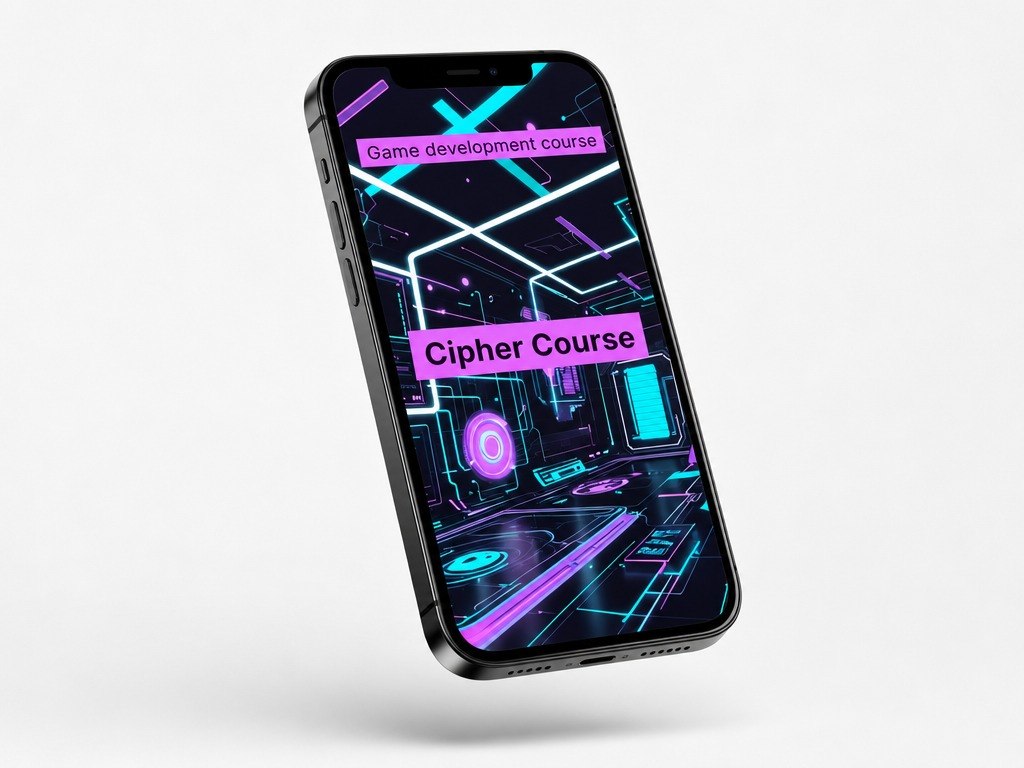
Gamvorodex
Cipher Course
Cipher Course
- 📁 Digital file available after purchase
- 🗂️ Long-term availability
- 🔐 Secure checkout
- 📝 Content updated in 2026
Self-paced learning overview
1. Problem Statement
When a learning-based game concept becomes larger, it begins to include many rules, events, objects, and interactions. Without a clear scheme, it may be difficult for a learner to understand which parts are truly needed and which only make the idea heavier. Some mechanics may repeat each other or add unnecessary load for the player. It is also important to explain rules in a way that fits the chosen world. Cipher Course helps break a game idea into clear parts and organize its inner logic.
2. Solution
This plan focuses on analyzing rules, signals, and interactions within a learning-based game idea. The learner reviews how to create mechanic schemes, describe action conditions, and explain the outcomes of choices. The materials help show which elements support the idea and which may need simplification or clarification. The course includes tasks for building rule tables, signal maps, and short descriptions of game situations. This format suits learners who want to work with game logic more carefully and in more detail.
3. What's Inside
- Module 1: Rule Decode Map — learners will understand how to break game rules into separate parts and explain their role in a learning concept.
- Module 2: Signal Reading — learners will review how events, objects, and changes in space can guide the player toward next actions.
- Module 3: Choice Condition Grid — learners will learn how to describe choice conditions, possible outcomes, and the link between action and world response.
- Module 4: Mechanic Comparison Sheet — learners will see how to compare several mechanics and identify the role each one serves.
- Module 5: Situation Breakdown — learners will prepare a short review of a game situation: what happens, why it matters, and how it is read by the player.
- Module 6: Clarity Notes — learners will review how to simplify rule explanations without losing meaning.
- Module 7: Logic Review Board — learners will collect a review of the inner logic of their learning concept and mark areas for further work.
4. Who is this for?
✅ A good fit if you:
- already have a game concept with several rules or mechanics;
- want to better understand the inner logic of game systems;
- are interested in the link between actions, conditions, and outcomes;
- want to learn how to explain more complex ideas in a structured way;
- enjoy working with tables, schemes, reviews, and logical connections.
❌ Not for you if:
- you are looking only for an introductory overview of game development;
- you do not want to analyze rules and mechanics;
- you plan to work only with the visual mood of a game;
- you do not enjoy tasks with tables or structural descriptions;
- you expect a ready-made set of decisions without your own analysis.
5. What You'll Learn
- how to break game rules into clear parts;
- how to describe signals that guide the player through events;
- how to create a table of conditions, choices, and outcomes;
- how to compare mechanics by their role in a learning concept;
- how to review a separate game situation through action, response, and result;
- how to explain more complex rules with simpler wording;
- how to identify unnecessary or unclear elements in an idea;
- how to prepare a review of the inner logic of a game for further learning work.
6. Purchase Terms
Cipher Course includes a 30-day request period for payment return according to the store rules. A request can be sent through the contact form or email with order details. Review of the request depends on purchase status, material type, and the store’s request handling rules.
Couldn't load pickup availability
How are the Gamvorodex plans different?
How are the Gamvorodex plans different?
Each plan has its own scope of topics, materials, and learning modules. Entry plans introduce the basic ideas of game development, while higher plans gradually add more practice, structure, and creative tasks. This helps learners choose a format that fits their current level and learning goals.
Do I need previous experience in game creation?
Do I need previous experience in game creation?
Previous experience is not required for the starter plans. The materials are organized so learners can gradually understand core terms, concepts, and the logic behind game creation. For higher plans, it may be useful to already understand the basics of digital creativity.
Share